2026-03-01
ArticleAutomation in the food industry improves efficiency, consistency, and product quality while reducing manual labor. From mixing and cutting to packaging, advanced technologies help manufacturers streamline production and stay competitive in a demanding market.
Automation in the food sector focuses on replacing or supporting manual tasks with specialized machines to improve productivity, quality, and consistency. Companies increasingly invest in solutions that simplify complex processes, from raw material preparation to final packaging. The benefits of automation in food processing include faster production cycles, reduced human error, and enhanced safety standards for both workers and consumers.
Unlike manual methods, automated systems maintain precise control over temperature, timing, and portioning. This consistency ensures that the end product meets strict quality standards while lowering the risk of product loss. Additionally, automation allows manufacturers to manage rising production demands without compromising efficiency.
Food producers adopt advanced food processing technology trends to remain competitive. The integration of robotics, sensors, and data-driven control systems now enables factories to monitor every stage of production in real-time. These advancements make it easier to maintain uniform results and comply with evolving industry regulations, especially when producing at scale.
By understanding the basics of automation, food manufacturers can better decide how to automate food production to match their operational needs. Moving from manual to automated processes often begins with analyzing production goals, identifying areas of inefficiency, and selecting technologies that directly improve output without unnecessary complexity.
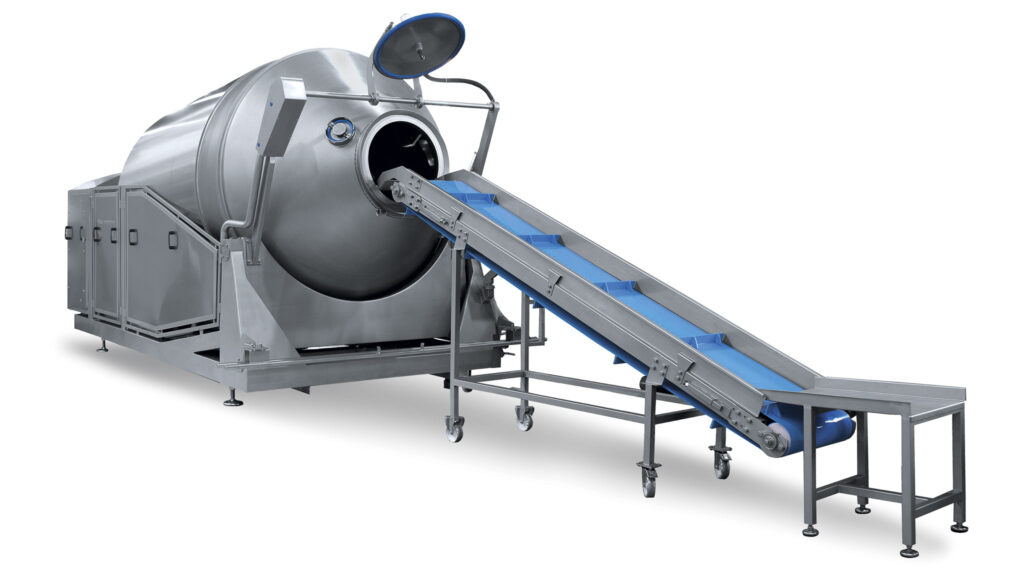
Several production stages benefit significantly from automation, especially those that require precision and repeatability. Understanding how to automate food production starts by identifying where machines can handle labor-intensive tasks better than humans:
When implemented strategically, these processes demonstrate the clear benefits of automation in food processing. Less manual handling also reduces contamination risks and ensures compliance with hygiene standards.
Emerging food processing technology trends focus on creating machines that handle multiple steps in a single system. For example, automated lines can manage marinating, cooking, and packaging without manual intervention, reducing downtime and optimizing workflow.
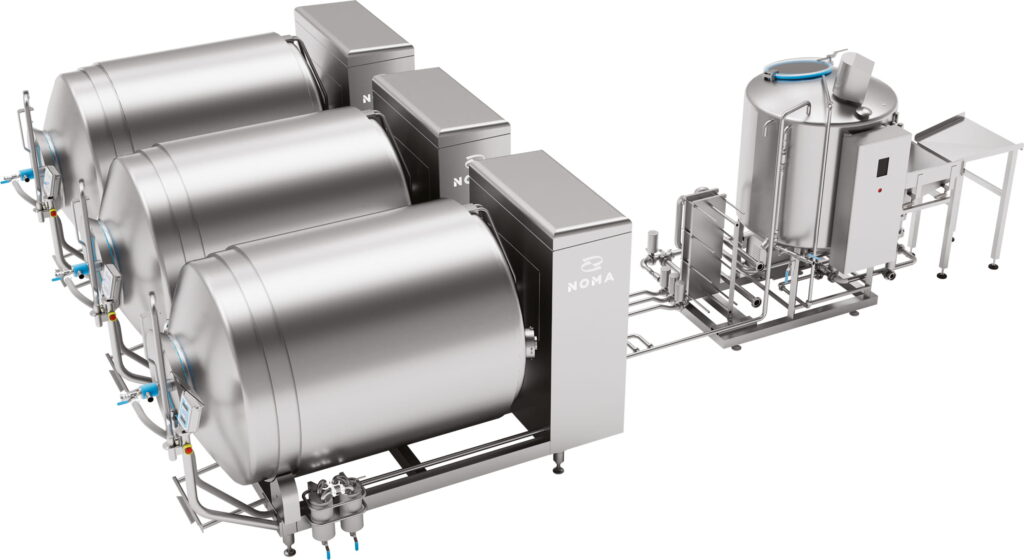
Production lines that operate automatically change the way manufacturers handle high-volume processing. Integrated automatic lines combine multiple stages into a single, continuous workflow, minimizing human involvement and enhancing overall performance.
Key efficiency improvements come from:
This structured workflow enhances product uniformity, which is crucial when operating on a large scale in food production. Consistency = better quality control and fewer rejected batches.
Furthermore, automated lines are designed to integrate advanced sensors and monitoring tools, ensuring that each batch meets quality specifications. These systems adapt to production needs, maintaining stable results across different product types and volumes. That’s why many companies exploring food processing technology trends find these lines to be one of the most cost-effective investments over time.
With automation, businesses can better manage rising consumer demand without compromising standards—a key competitive advantage.
While single machines improve specific processes, combining them into connected systems creates the highest operational impact. Integrating cutters, mixers, injectors, and heat treatment equipment into one coordinated production flow is where automation delivers its full potential.
This approach optimizes how to automate food production by reducing production bottlenecks and ensuring smooth transitions between stages. For example:
The result is a streamlined process where data from each machine informs the next step, allowing manufacturers to maintain continuous quality control. These integrated setups highlight the growing benefits of automation in food processing, enabling manufacturers to produce higher volumes without increasing labor costs.
At NOMA Nowicki Machinery, we support these goals by providing advanced equipment and automatic linestailored to customer requirements. With decades of experience, we deliver solutions that improve consistency, efficiency, and overall process management for food manufacturers worldwide.
Follow the latest events and changes in our company – stay up to date with what’s important.