2026-05-27
ArticleVacuum technology is changing the way we preserve and process food. Its application in food processing allows for a significant extension of shelf life while fully preserving product quality. In this article, we will examine the relationship between vacuum technology and product quality, and how vacuum processing impacts the foods we consume every day.
In this article, you will learn:
Vacuum technology significantly improves both the quality and shelf life of food products. Processing food with sub-atmospheric pressure machinery primarily delivers:
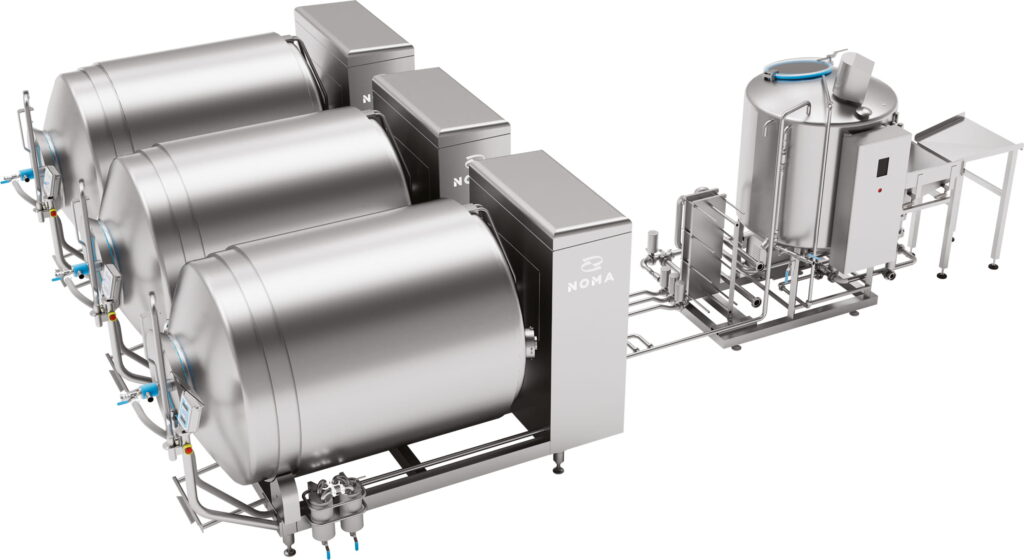
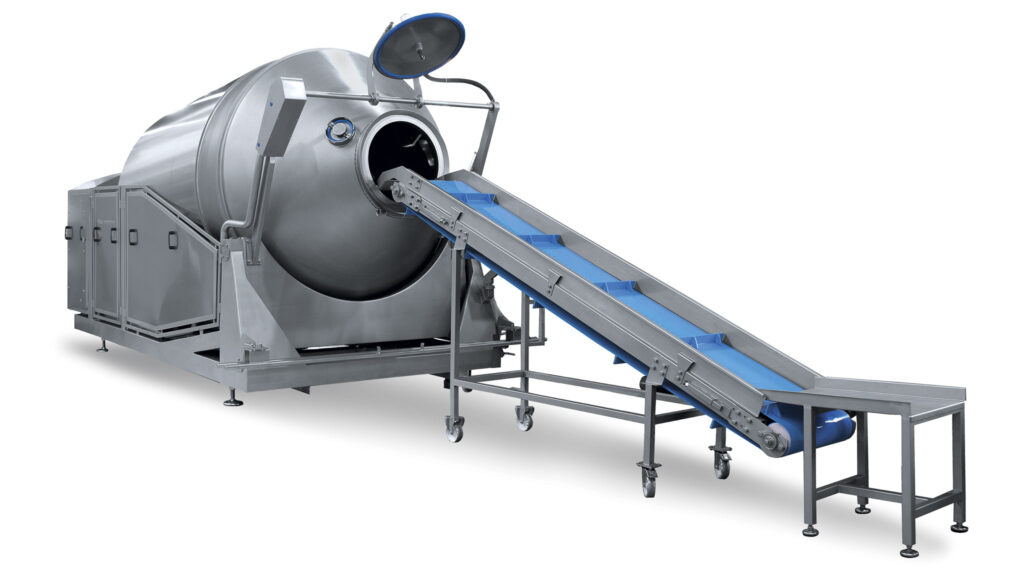
One of the most vital applications of vacuum technology in food processing is its integration into equipment like vacuum tumblers and vacuum bowl cutters. Vacuum tumblers improve flavor, juiciness, and product homogeneity. Additionally, they distribute marinade evenly, resulting in a consistent final product quality that is impossible to achieve through manual processes. This shortens marinating times and boosts overall process efficiency.
Meanwhile, vacuum bowl cutters are used for cutting , stuffing preparation, and emulsification—primarily in the meat industry, but also in fish, confectionery, fruit and vegetable processing, ready meals, and pet food production. Operating under vacuum allows for precise control over particle size reduction and mass structure, which translates to better consistency and superior cross-sectional product aesthetics. Interestingly, vacuum bowl cutters can also feature cooking options, making them suitable for thermal pre-treatment. This enables products like pâtés to be crafted under vacuum conditions, preserving their unique texture and color.
An additional benefit of utilizing vacuum environments is the reduction of oxygen during production, which extends product shelf life and enhances color stability.
The benefits of vacuum processing include the preservation of flavor, texture, and nutritional value in food products. By minimizing food-to-oxygen contact, vacuum environments slow down oxidation and inhibit microbial growth. As a result, products stay fresh longer and remain highly appealing to consumers.
Vacuum processes carried out by automated equipment—such as marinating or size reduction—ensure optimal production parameters. This maintains uniform quality across all products, regardless of the batch size. Vacuum processing extends food shelf life without the need for additional preservatives. This is a crucial factor for manufacturers striving to offer “clean label” food with minimal additives that don’t compromise the final flavor.
The relationship between vacuum technology and product quality also extends to post-preparation stages. Vacuum packaging minimizes oxygen contact, slowing oxidation and microbial spoilage. Consequently, products retain their freshness, flavor, and nutritional value for an extended period. Furthermore, vacuum storage reduces moisture loss, which is essential for maintaining the ideal food texture.
Chopping and marinating under vacuum effectively reduces product exposure to oxygen, which slows down oxidation and inhibits the growth of spoilage-inducing microorganisms. This allows food to retain its freshness, flavor, and nutritional value for much longer.
Vacuum technology is utilized across numerous food industry processes, including:
Size reduction and emulsification: High-speed rotation vacuum bowl cutters allow for fat emulsification and the preparation of meat stuffing with varying degrees of fineness. Optional cooking features also enable pâté preparation under vacuum.
Marinating/Tumbling: Vacuum environments accelerate marinade absorption within the muscle tissue.
Vacuum packaging: Removing air from packaging further preserves product quality over extended periods.
Applying a vacuum during processing preserves the natural structure and flavor of food products. Uncontrolled moisture loss is minimized, and oxidation is restricted, resulting in a better cross-sectional texture and a more intense flavor profile in the final goods.
Yes, vacuum processing helps preserve the nutritional value of food. The controlled environment and mechanical processing cycle mitigate the loss of flavor attributes and nutrients across individual ingredients.
Implementing vacuum technology in a production facility delivers numerous economic advantages, including:
Extended product shelf life.
Enhanced product quality, which boosts customer satisfaction and can drive sales growth.
Optimized production processes, resulting in energy and raw material savings.
The ability to launch new products with superior quality parameters, yielding a distinct competitive advantage in the market.
Follow the latest events and changes in our company – stay up to date with what’s important.