In 2024, NOMA Nowicki Machinery implemented a vacuum tumbler with a defrosting system – equipped with a glycol jacket and steam injection – at a poultry processing plant in South America. This solution replaced traditional defrosting conducted in an open production hall at ambient temperature.
The project encompassed modifying the loading conveyor, developing customized process programs tailored to the raw material and plant requirements, and training the operating staff. According to data provided by the client post-implementation, raw material losses were reduced from up to 7% down to zero, and the investment paid for itself within a few months.
| Client | Poultry processing plant |
| Location | South American country |
| Year of Completion | 2024 |
| Previous Process | Defrosting in an open production hall at ambient temperature |
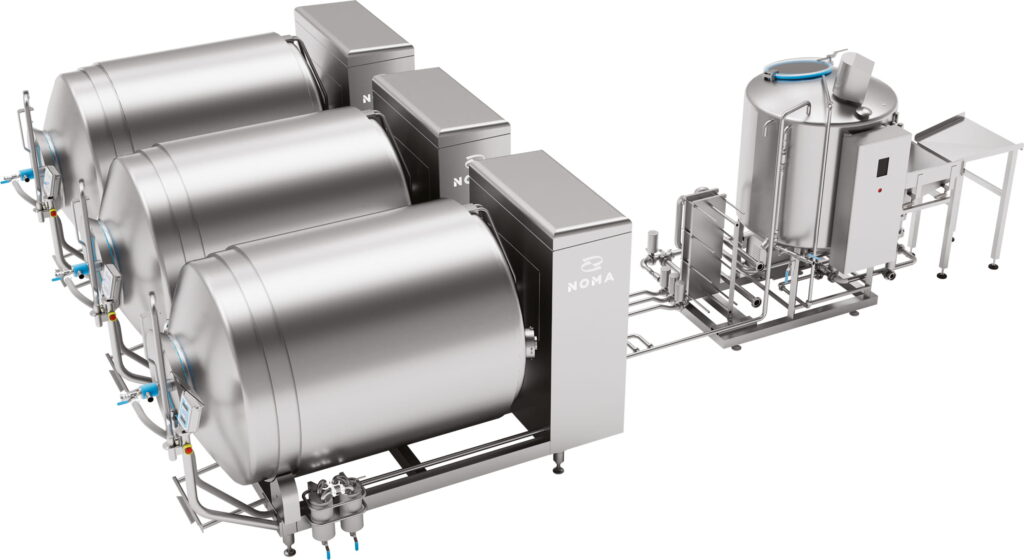
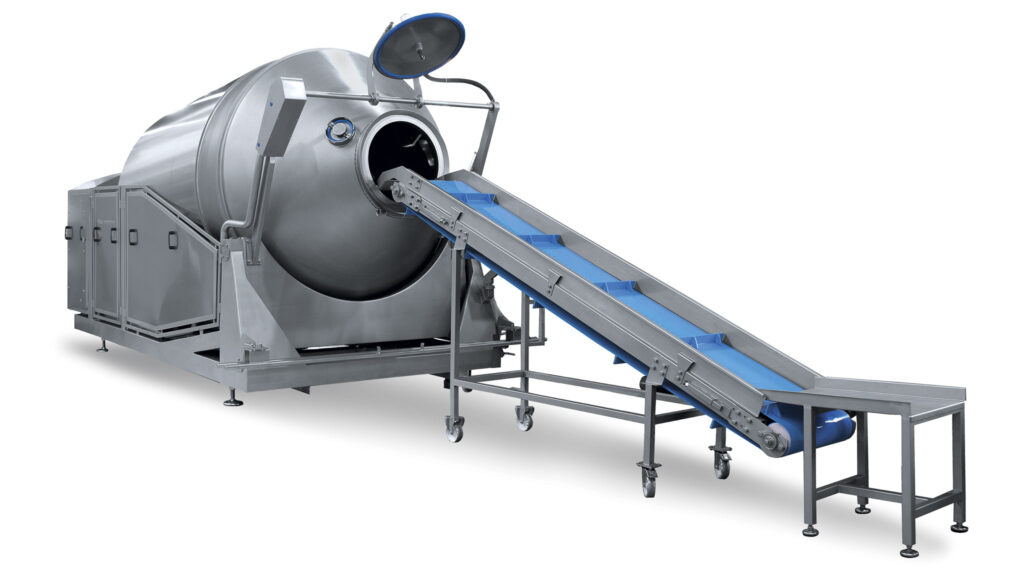
| Solution Implemented | NOMA MA-G-12000 PSCH VACUUM TUMBLER with defrosting system, glycol jacket, and steam injection |
| Customization | Loading conveyor modification |
| Scope of Implementation | Process program selection, commissioning, and staff training |
| NOMA On-Site Presence | 1 week |
| Client-Reported Results | Reduction of raw material losses from up to 7% to 0% |
This project demonstrates how NOMA solutions are applied in poultry processing and customized to meet the specific operational conditions of a processing plant.
Prior to installing the tumbler, raw material was defrosted in an open production hall at ambient temperature. The process was time-consuming and required significant floor space. It was also prone to microbiological issues, degradation of meat structure, and high drip loss, with overall raw material losses reaching up to 7%.
The client sought to improve defrosted meat quality, shorten cycle times, eliminate material yield losses, and reduce the physical footprint required for defrosting.
After analyzing the facility’s operational needs, NOMA proposed a specialized defrosting tumbler equipped with a glycol jacket and a steam injection system. Key factors driving the selection included:
NOMA technology injects small amounts of steam under near-vacuum conditions. The glycol jacket enables precise heating or cooling of the drum walls, maintaining full control over process parameters.
For a detailed technical overview, see the article: Defrosting System in NOMA Tumblers.
The loading conveyor was custom-modified for this project to integrate seamlessly into the client’s existing handling layout prior to commissioning.
A NOMA food technologist and service technician conducted implementation within one week at the South American facility. During this time, they:
At the client’s request, an additional program for tumbling and marinating previously defrosted raw material was also created, expanding the machine’s utility beyond defrosting alone.
Ongoing technical and technological support continued after initial setup. This forms a core part of NOMA’s service support , which includes commissioning, hands-on training, and long-term technical consulting.
“The key to this implementation was the precise application of the technology and tailoring process parameters to the raw material and plant specifications. Close collaboration between NOMA’s engineering team and the client’s staff was critical, as was our ongoing technical support post-commissioning.” – Justyna Pawlik, Key Account Manager, NOMA
Based on the client’s post-implementation review:
According to the client, the system achieved full return on investment within a few months.
This implementation demonstrates that successful industrial defrosting relies on more than just hardware configuration. Tailored process programming, thorough operator training, and expert technological support during startup are equally essential.
By combining equipment delivery with conveyor customization, tailored recipe programming, staff training, and ongoing support, NOMA integrated the system directly into the plant’s active production workflow while enabling downstream processing capabilities.
NOMA installed a specialized vacuum tumbler with a defrosting system, glycol jacket, and steam injection, alongside a custom-modified loading conveyor.
A NOMA food technologist and service technician worked on-site in South America for one week, setting up customized recipes, launching the process, and training the local personnel.
Yes. An additional program was configured for tumbling and marinating defrosted raw material, allowing the equipment to be utilized in downstream processing stages.
Choosing the right equipment and process parameters depends on the raw material type and volume, existing defrosting methods, target outcomes, and plant layout constraints.
Explore NOMA’s industrial vacuum tumblers or contact the NOMA team to discuss your process requirements.
Follow the latest events and changes in our company – stay up to date with what’s important.